Social media manager contract template: the 15 clauses you need
Every clause explained in plain English, the 5 that protect you most, and what most free templates leave out. Written for freelancers.
A social media manager contract should cover: services, term, fees and payment, ad spend, content approval, revisions, account access, client responsibilities, content ownership, no guarantee of results, confidentiality, liability, ending the agreement, independent contractor status and general terms. The 5 that protect beginners most are scope, upfront payment, approvals, account ownership and notice period.
Why you need a contract, even for small clients
Most problems between social media managers and clients aren’t about bad work. They’re about unclear deals: “I thought reels were included,” “We’ll pay at the end of the month,” “Can you also do our TikTok?” A contract settles all of it before it starts.
- It gets you paid on time, upfront.
- It stops scope creep, where the job grows but the price doesn’t.
- It makes you look professional, which helps you charge more.
- It protects the client too: they know what they get and who owns their accounts.
The 15 clauses of a social media management contract
Here’s what each clause does, in plain English. This is the same structure as the editable contract in our system.
Exactly what you do each month: platforms, number of posts and videos, engagement hours, reporting. Anything not listed is extra.
Start date, the minimum term (for example 3 months) and what happens after: usually month to month.
Monthly price, due date (start of the month), how they pay, and late fees.
The client pays ad budgets straight to the platform. Your management fee is separate.
How and when the client approves posts, and what happens if they don’t reply in time.
How many rounds of edits each post gets. Extra rounds cost extra.
The client owns their accounts and gives you access. You never change owner details or passwords you don’t need.
What they must give you: photos, offers, answers, logins, and how fast.
Who owns finished posts (usually the client, once paid), and whether you can show them in your portfolio.
You promise the work, not follower counts or sales, because algorithms and markets aren’t in your control.
Both sides keep private business information private.
A cap on what you could owe if something goes wrong, usually limited to fees paid.
Notice period (for example 30 days), how unpaid work is settled, and handing back access.
You’re a business, not an employee. You handle your own taxes, tools and hours.
Which law applies, how changes are made (in writing), and that this is the whole agreement.
The 5 clauses that protect beginners most
- Services (scope). List numbers: “12 posts, 4 reels, 2 platforms.” Vague scope is the #1 reason freelancers end up working for free.
- Fees and payment. Paid at the start of each month, before work starts. Never “net 30” with a new client.
- Content approval. Set a deadline. If the client doesn’t reply in 2 business days, you can post or skip, and it still counts.
- Account access and ownership. The client owns their accounts. You get access, not ownership. This builds trust and keeps you out of fights.
- Ending the agreement. A notice period (often 30 days) means a client can’t cancel the day after you’ve planned their whole month.
A short proposal before the contract, and a clear monthly price. Proposal sells it, contract protects it.
What free contract templates often miss
Many free templates come from e-signature or document software and are written for any kind of service. For social media work, check that yours covers:
- Ad spend paid by the client directly, separate from your fee.
- Approval deadlines, so a silent client doesn’t freeze your calendar.
- Revision limits per post.
- Account ownership and access, including what happens to access when the contract ends.
- No guarantee of results on followers, reach or sales.
- Portfolio use, so you can show the work.
Get the editable contract
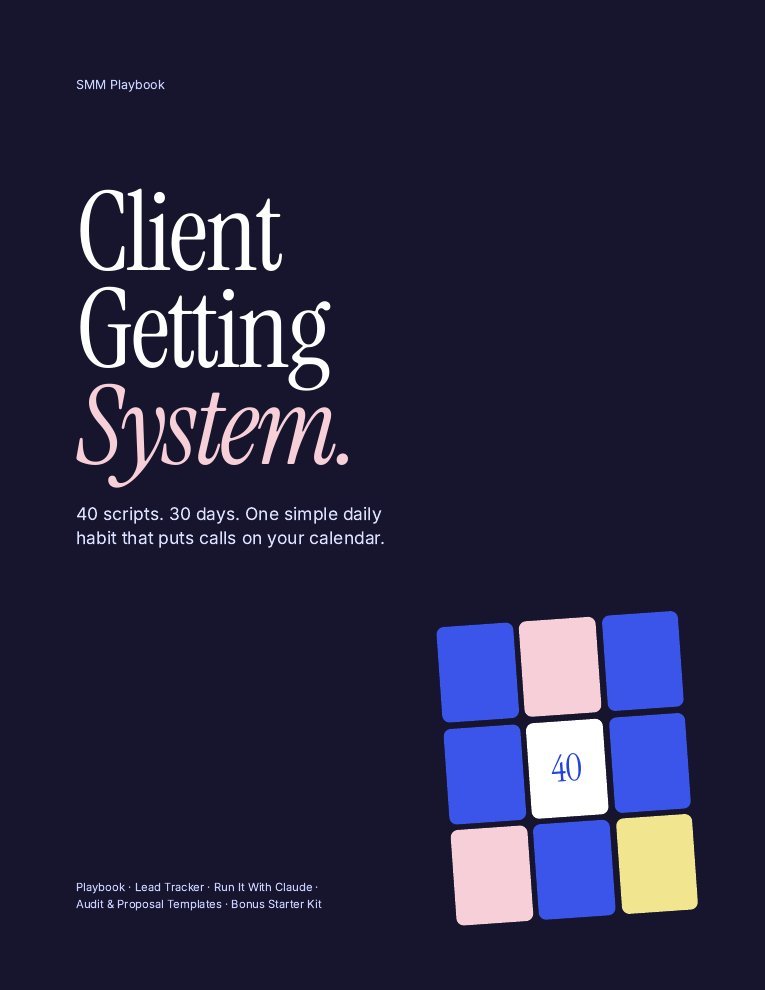
The Client Getting System includes the editable Word contract with all 15 clauses, the proposal template and the onboarding form, plus everything to find the clients in the first place.
- 40 copy-and-paste scripts (DM, email, walk-in, follow-ups, replies)
- Lead tracker that scores every business for you
- Free audit + proposal templates, call script
- Contract, onboarding form and pricing workbook
- Run It With Claude guide (Claude finds the leads)
One payment · Instant download · Works with free Claude
How to send it and get it signed
- After the call, send the proposal first. Once they say yes, send the contract the same day.
- Fill in their name, your price, the start date and the scope. Read it once out loud.
- Use a free e-signature tool or ask them to sign, scan and send it back.
- Send the first invoice with the contract. Start work after both are done.
- Send your onboarding form to collect logins, brand photos and goals.
A template is a starting point. Laws differ by country and state. For larger clients or unusual deals, have a local lawyer check your contract.
FAQ
What should a social media management contract include?
At minimum: services and scope, term, fees and payment, ad spend, content approval, revisions, account access and ownership, client responsibilities, content ownership, no guarantee of results, confidentiality, limitation of liability, termination, independent contractor status and general terms.
How long should a social media management contract be?
Usually 2 to 5 pages. Long enough to cover the 15 clauses clearly, short enough that a small business owner will actually read and sign it.
How long should the contract term be?
Many freelancers use a 3-month minimum, then month to month with 30 days’ notice. Results take time to show, and a minimum term protects your planning.
Do I need a contract for a friend or a small client?
Yes. Friends and small clients are where unclear deals cause the most damage. A short contract keeps the friendship and the business separate.
Is a proposal the same as a contract?
No. A proposal sells the plan and the price. A contract is the signed agreement with the legal terms. Send the proposal first, then the contract once they say yes.
Can I use a free contract template?
You can, but check that it covers social-media-specific points like ad spend, approvals, revisions and account ownership. Many generic templates don’t. When in doubt, ask a local lawyer.
Keep reading
Sources
- Clause list based on the SMM Playbook client contract template (2026), written for freelance social media managers.
General information, not legal, tax or financial advice. Results depend on your effort and market. See our earnings disclaimer.